• The Stoic Designer: Applying Ancient Wisdom to Modern UX Challenges

    If you’re a UX professional tackling the relentless pace of shipping digital products, the complexities of design leadership, or perhaps the challenging job market, then this space is for you. As a career product designer and a freshly minted design leader with 25 years on the job, I experience similar pressures to those you might encounter daily. From advocating for user needs against tight deadlines to cultivating a thriving design team, the daily challenges are significant. This blog is more than just a personal endeavor; it’s a shared journey to discover more resilient and effective ways to lead, learn and, generally, get stuff done.

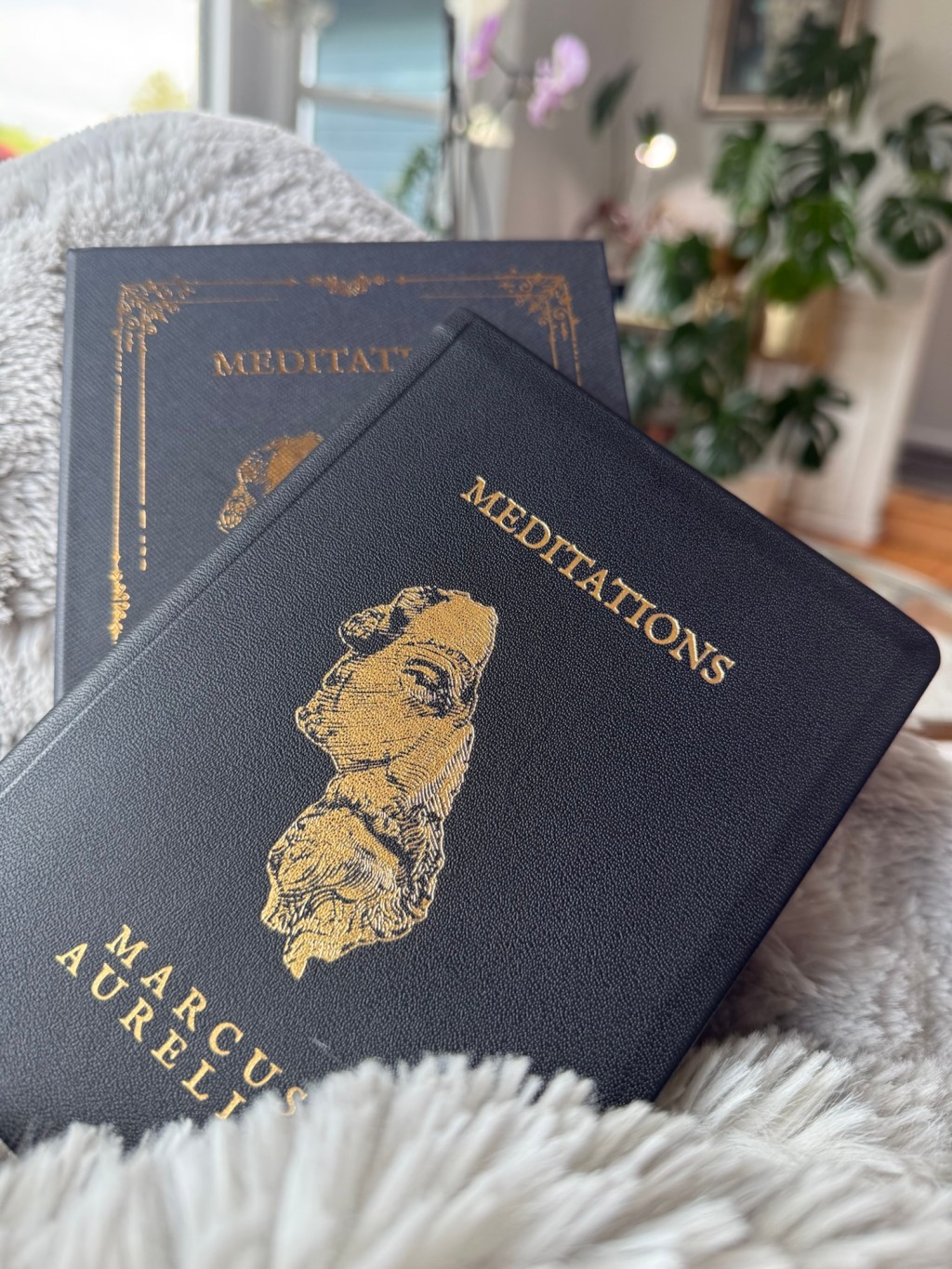
    My own journey into Stoicism began not in a philosophy class, but through the practical wisdom of Ryan Holiday’s “The Daily Dad” and “The Daily Stoic”, which then led me to the profound reflections of Marcus Aurelius’s “Meditations”, the works of Seneca, and Epictetus. This philosophy, with its emphasis on introspection, reason, and virtue, immediately spoke to my soul.

    And it quickly started to work. Embracing Stoic principles has already made me a better dad, a more present husband, a sharper designer, and a more composed and effective boss. The clarity it brings to separating what’s within my control from what isn’t, and the focus it places on my reactions rather than external events, has been transformative.

    Firstly, my aim here is to share insights and strategies for managing the everyday challenges that face UX Designers and leaders today. We’ll explore practical ways to approach everything from stakeholder management and team dynamics to creative blocks and career growth, all through the lens of timeless Stoic philosophy. My hope is that by reflecting on these principles, you’ll find greater clarity, resilience, and effectiveness in your own roles.

    But beyond helping others, this blog is also a profound learning journey for myself. As Seneca, one of the great Stoic philosophers, once said, “Docendo discimus” – by teaching, we learn. The act of articulating these Stoic concepts and applying them to real-world UX scenarios forces a deeper understanding, helping me solidify my own grasp of these powerful ideas. It’s a commitment to continuous self-improvement, refining my leadership skills, and strengthening my own inner citadel as a design leader.

    Consider this our shared space for growth. We’ll tackle common challenges, explore how ancient wisdom can offer modern solutions, and perhaps, along the way, we’ll all become a little more resilient, a little more rational, and a lot more effective in shaping the user experiences of tomorrow.

    I’m excited to embark on this journey with you. Shoot me an email and let me know what some of the immediate challenges you’re facing are. We’ll explore them together!

  • Thriving where you are, the Stoic way

    There’s a sense of unease that’s hard to shake in the UX community. You hear it in your one-on-one conversations with colleagues and see it on LinkedIn feeds. The market is contracting. The once-booming demand for UX talent has slowed, and for many, the goal is no longer about finding a better job, but about simply holding on to the one you have. For a lot of us, this means enduring frustrating challenges such as low organizational UX maturity, being under-resourced and overextended, or knowing that your voice just isn’t heard. In these cases, it’s easy to believe that your problems would vanish with a new title or a different company logo on your badge.

    But what if the company, the budget, or the boss are not the problem? What if the real obstacle is our perspective? What if we realize that the problems we face aren’t roadblocks, but the path forward we actually need to grow and prosper? As the Stoic philosopher Marcus Aurelius wrote, “The impediment to action advances action. What stands in the way becomes the way.”

    Centuries earlier, the philosopher Seneca noted a simple truth: no matter where we travel, we bring ourselves along. The anxieties and frustrations we hope to leave behind are the same things we carry with us from one job to the next. The real work, then, is not to find a new employer but to master ourselves right where we are. This isn’t passive resignation or self-delusion; it’s active, purposeful self-improvement. It’s about turning your present workplace, with all its imperfections, into your personal dojo, a place of intense training where you become more resilient, effective, and centered.

    This is the path we can take as UX professionals, guided by Stoic wisdom. It’s about developing an inner resilience that makes you truly valuable and calm, regardless of the chaos around you. And it all begins not with a new job search, but with a deliberate shift in how you see the world and the daily practice of a few powerful habits.

    Stoic exercises that will help

    The challenges you face, a stakeholder rejecting your meticulously researched and crafted design, a feature being shipped without user testing, or a project getting canceled mid-stream, are not misfortunes, they are opportunities for growth. By doing a few simple exercises, you can transform these obstacles into tools for your personal development.

    Focus on what you can control

    The foundation of this philosophy is the simple, yet powerful, idea of distinguishing between what’s in your control and what isn’t. You can’t control your company’s low UX maturity, the budget, or a colleague’s attitude. But you absolutely can control your own actions, your effort, your communication, and your emotional reaction to events.

    The exercise: The next time you face a frustrating situation, grab a piece of paper and create two columns: “In My Control” and “Not in My Control.” If a critical feature was delayed in a meeting, place “The decision to delay the feature” in the “Not in My Control” column. Then, under “In My Control,” list what you are in control of: “My emotional reaction,” “how I communicate the news to my team,” “my plan for the next steps,” and “my effort to keep advocating for the user.”

    This simple practice instantly reduces anxiety by redirecting your energy from useless worry to productive action. It helps you focus on what you can change, building a profound sense of self-efficacy and quiet confidence.

    Prepare for potential challenges

    This practice is about mentally preparing for potential future challenges to lessen their impact when they happen. This isn’t about negative thinking; it’s about inoculating yourself against shock and disappointment.

    The Exercise: Before a big presentation to leadership, take a moment to briefly visualize the worst-case scenario. Imagine they reject your proposal, critique your work harshly, or completely ignore your user research findings. Now, calmly visualize your best response. You are not angry or defensive. Instead, you are calm, curious, and open to feedback. You ask clarifying questions and seek to understand their perspective.

    By anticipating setbacks, you strip them of their power to emotionally overwhelm you. You replace a highly emotional reaction with a rational, thoughtful one.

    Embrace your reality

    This is the powerful idea that we shouldn’t just accept what happens to us, but actively embrace it as necessary. The challenges in your current role are not unfortunate circumstances; they are the perfect conditions for growth.

    The Exercise: When faced with a roadblock, for example, you’re under-resourced on a project, force yourself to reframe the situation. Instead of seeing it as a problem, say to yourself (or write down): “This is the perfect opportunity for me to master my skills in rapid prototyping, creative problem-solving with constraints, and strategic prioritization.” The tight budget isn’t a limitation; it’s an opportunity for clever problem-solving.

    This mindset turns every frustration into a training exercise. You stop viewing yourself as a victim of circumstance and start seeing yourself as a proactive problem-solver.

    Final thoughts

    The truth is, you can’t control the market, the company’s budget, or the latest tech layoffs. But you can control how you respond. You can’t force your colleagues to adopt a user-centric mindset, but you can become the most skilled and insightful advocate for the user they’ve ever met. By committing to these practices, you stop “wandering” in your mind for a better job and start living well in your current one. You can do great work and live well anywhere. That power is already within you.
  • Every Designer Needs a Little Ancient Wisdom

    Every UX designer knows the feeling: the blank canvas of a new project, the conflicting feedback from stakeholders, the pressure to deliver elegant solutions in an imperfect world. Our discipline, by its very nature, thrives on ambiguity, yet often leaves us wrestling with uncertainty, stress, and the creeping shadow of self-doubt. What if the answer to navigating this complex landscape wasn’t another design tool, but a timeless philosophy? Enter Stoicism—a powerful framework for living and working better, especially relevant for those of us tasked with bringing order to digital chaos.

    Stoicism was made for the real world.
    It wasn’t developed in ivory towers. It was forged in the messy realities of life in ancient Rome and Greece — where political upheaval, war, exile, and betrayal were common. The Stoics weren’t theorists; they were statesmen, soldiers, slaves, and emperors. They weren’t trying to optimize their productivity apps. They were trying to survive, to stay principled when the world gave them every reason not to.

    At its heart, Stoicism is about clarity. It separates what is in our control from what is not. It tells us to meet our daily challenges not with complaint, but with character. It reminds us that external chaos is inevitable — but internal chaos is optional.

    Designers operate in environments that are often irrational, fast-moving, and full of competing incentives. And yet, we’re tasked with bringing order to that chaos, often invisibly. Stoicism doesn’t offer easy fixes — but it offers a posture. A way to stay centered, purposeful, and less shaken by the noise.

    It reframes the struggle.
    Designers don’t just create interfaces. We navigate conflicting goals, shifting strategies, and feedback that ranges from helpful to absolutely useless. Stoicism doesn’t eliminate those frustrations, but it reframes them. In one of my favorite passages, Marcus Aurelius wrote, “The impediment to action advances action. What stands in the way becomes the way.” It gives us a way forward.

    This isn’t toxic positivity. It’s a hard-won lens: that setbacks aren’t interruptions — they are the terrain. In design, as in life, there is no clear path. There is only the one you shape as you move forward.

    It offers detachment without apathy.
    Stoicism isn’t about being emotionless. It’s about not being ruled by emotion. In work environments where your ideas are routinely challenged, misunderstood, or ignored, it’s tempting to become cynical or defensive. Stoicism offers an alternative: engage with care, but release your grip on the outcome. Your job is to do the work — the best work you can — with integrity, based on sound research and user-centered principles. Whether your work is praised and implemented, or discarded in favor of an executive’s whim, isn’t yours to decide. You are responsible for your actions, your process, and your dedication to the user, not their reception or the political winds. That’s freedom – and it allows you to move on to the next challenge without carrying the emotional baggage of past ‘failures’.

    It’s not self-help. It’s self-discipline.
    Philosophy, at its best, doesn’t offer comfort. It offers clarity. Stoicism demands honesty with yourself: about your motives, your reactions, your limits. In that sense, it’s not something you apply to “feel better” — it’s something you use to see better.

    For designers, that kind of clarity is essential. It keeps the ego in check. It tempers frustration. It helps you return, again and again, to the work — not because it’s easy, but because it’s yours to do.

    Philosophy won’t solve your broken design system or make your stakeholder more empathetic. But it will help you stand upright in the face of it all. And that — in a field built on ambiguity — might be the most powerful tool you have.